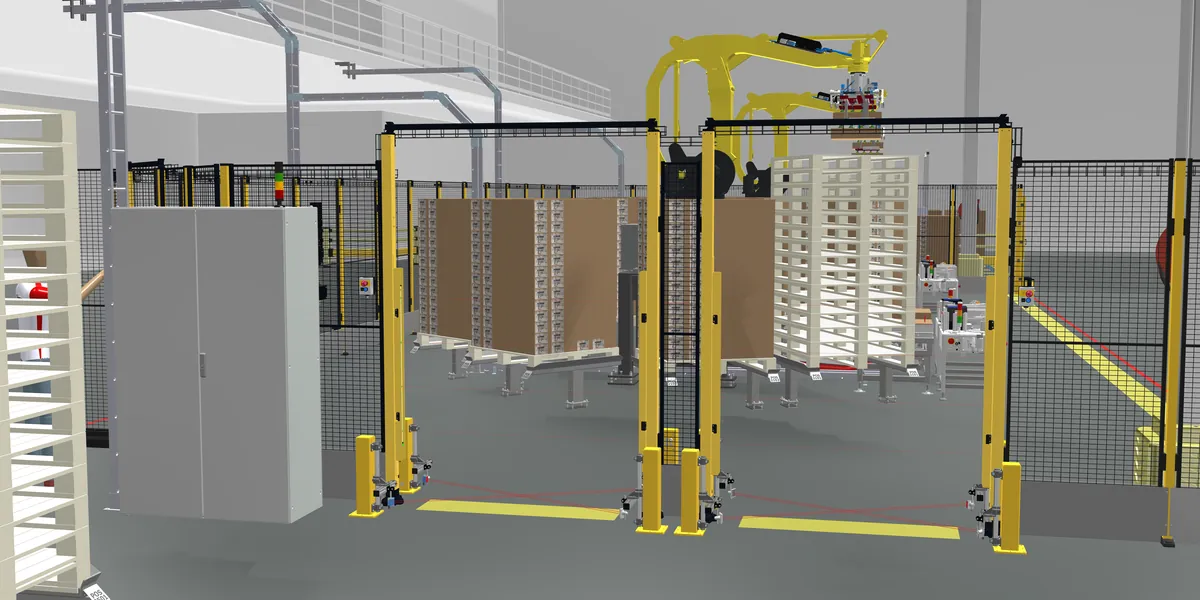
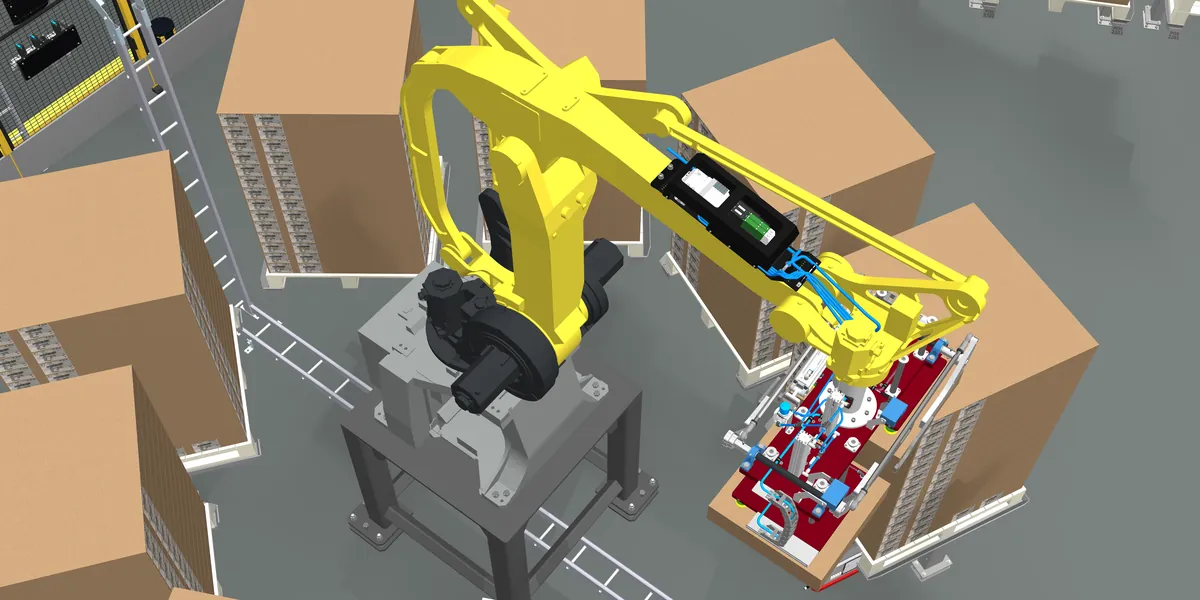
We design and integrate robotic handling, conveying systems, and mobile robots to optimise warehouse storage, material flow, and order fulfillment, improving accuracy, throughput, and operational efficiency across logistics environments.
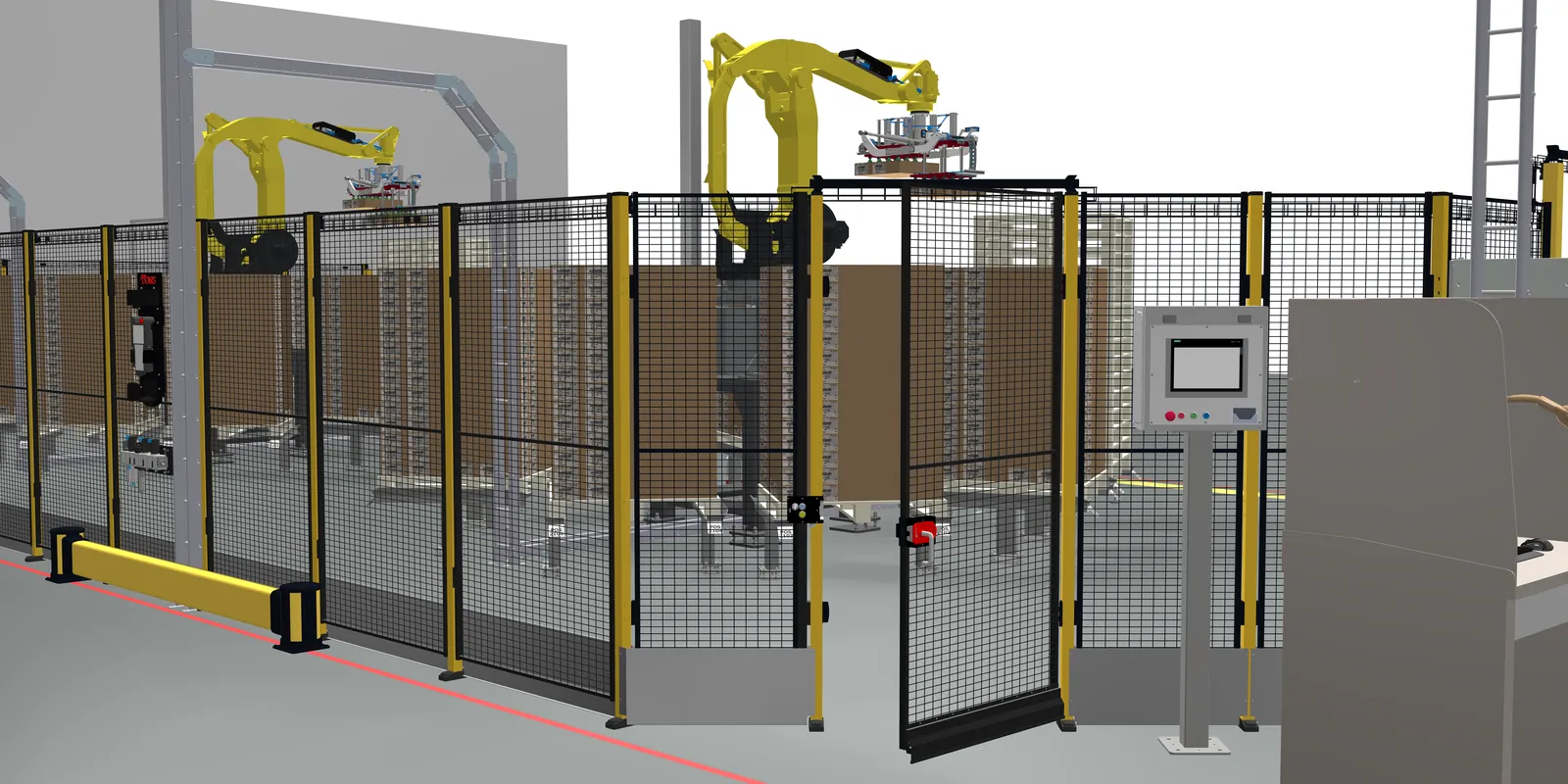
Industry challenges
Warehousing operations face constant pressure to handle growing volumes, diverse product formats, and faster order fulfillment without increasing space or labour costs. Manual handling, fragmented workflows, and limited visibility reduce accuracy, slow down operations, and constrain scalability as demand increases.
Inefficient layouts and manual processes limit storage density and usable warehouse space.
Manual transfers and disconnected systems increase handling times across inbound, storage, and outbound flows.
Human-dependent picking and palletising increase the risk of errors in complex or mixed orders.
Rigid systems struggle to adapt to changing product mixes, volumes, and order profiles.
Our approach
Automation is designed as a connected system, aligning robotic handling, conveying, and mobile transport to optimise end-to-end warehouse workflows.
Solutions adapt to varying product sizes, packaging formats, and throughput requirements without disrupting operations.
Systems are engineered to improve picking, palletising, and order preparation accuracy across high-volume environments.
Automation supports future growth, layout changes, and evolving logistics demands without requiring full system redesigns.
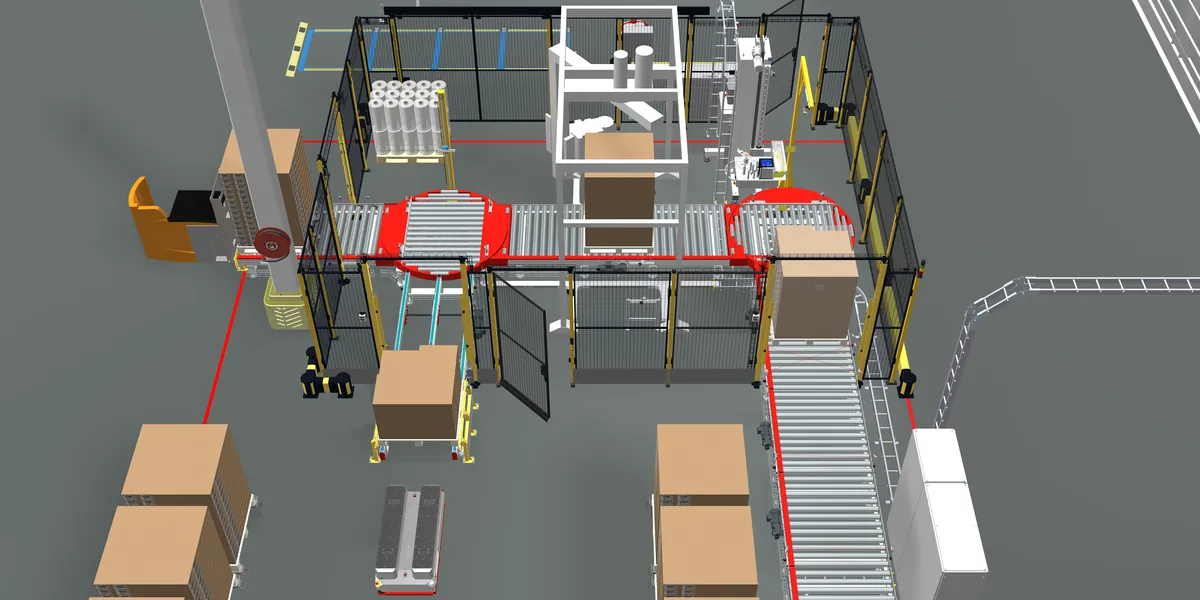
Automation for handling boxed products from storage to outbound logistics.
Robotic systems for building mixed pallets based on complex order requirements.
Automation reduces manual handling, optimises material flow, and accelerates order fulfillment. Integrated systems improve throughput and accuracy, allowing warehouses to handle higher volumes while reducing congestion, delays, and dependence on labour-intensive processes across storage and dispatch operations.
Yes. Warehouse automation solutions are designed to handle mixed products, varying packaging formats, and changing order profiles. Systems remain flexible as inventory composition, order complexity, and volume fluctuate over time, without disrupting overall warehouse operations.
Automation improves consistency and repeatability across picking, palletising, and order preparation processes. By reducing manual intervention and standardising handling steps, error rates decrease and overall order accuracy improves, especially in high-volume or complex warehouse environments.
Warehouse automation systems are engineered to support future growth. Layouts, equipment, and control logic can be adapted to increased throughput, new product categories, or evolving logistics strategies without requiring a complete redesign of the warehouse infrastructure.
Tell us about your warehouse layout, product mix, and logistics challenges. We’ll evaluate how automation can improve space utilisation, reduce handling times, and increase order accuracy across your warehousing operations.