Robot handling integrated into real production lines

We engineer and integrate robotic handling solutions that automate repetitive and precision-critical tasks as part of fully coordinated production systems, designed for reliability, safety, and long-term operation.

Where robotic handling delivers real operational impact

Robotic handling becomes essential when manual operations begin to limit speed, consistency, and safety on the production floor. Repetitive tasks, precision-dependent processes, and physically demanding work reduce throughput, increase variability, and place continuous strain on operators, especially as production volumes grow.

01

Manual handling limits output

Repetitive manual tasks slow down cycle times and make it difficult to increase production capacity without adding labour.

02

Precision is hard to sustain

Tasks that rely on consistent positioning and timing are difficult to maintain manually, leading to variability and quality issues.

03

Operator strain impacts safety

Physically demanding operations increase fatigue, raising the risk of errors, injuries, and unplanned downtime.

04

Isolated automation falls short

Automating individual tasks without considering the full production flow limits efficiency gains and creates new constraints elsewhere.

Robot handling integrated into the production system

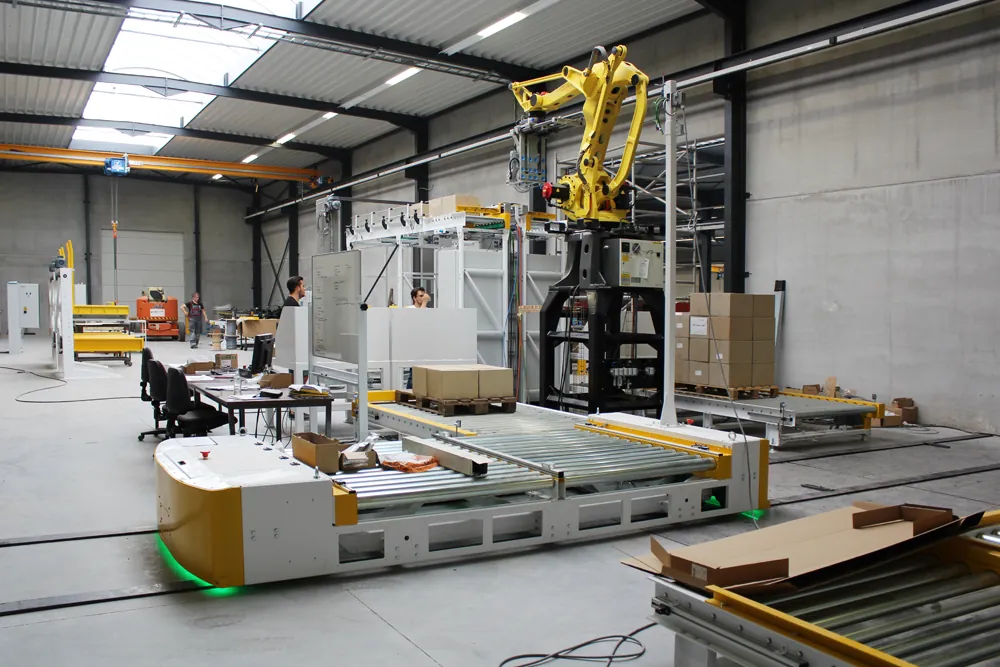
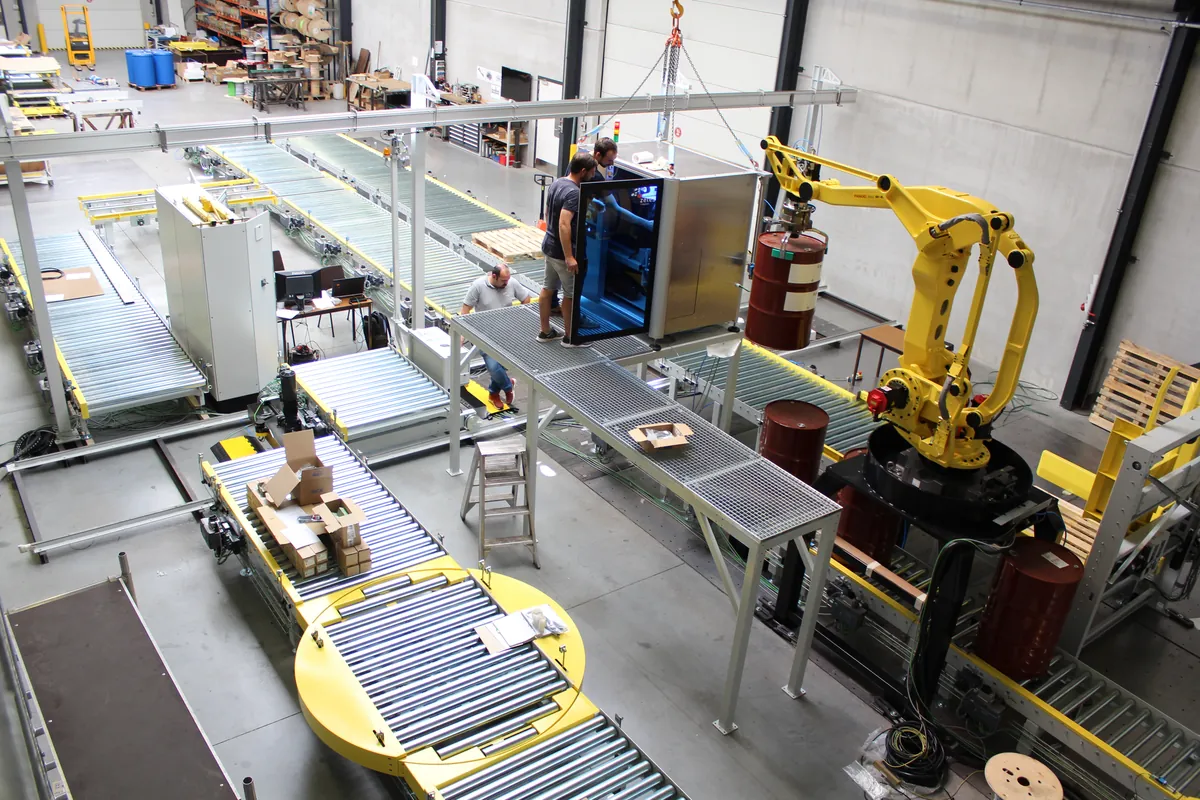
Robot integrated into a production line with conveyors and turntable
01

System-level integration

Robot handling is engineered as part of the full production flow, working in coordination with conveyors, layouts, and surrounding processes.
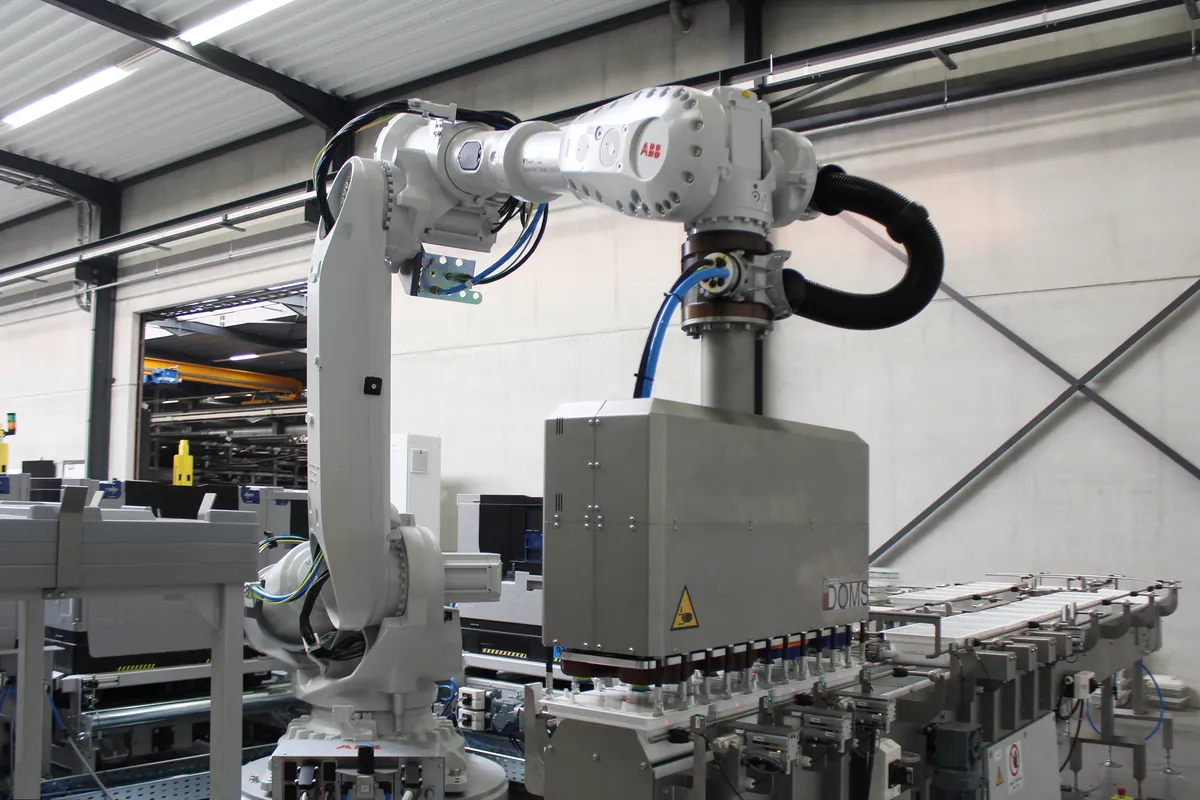
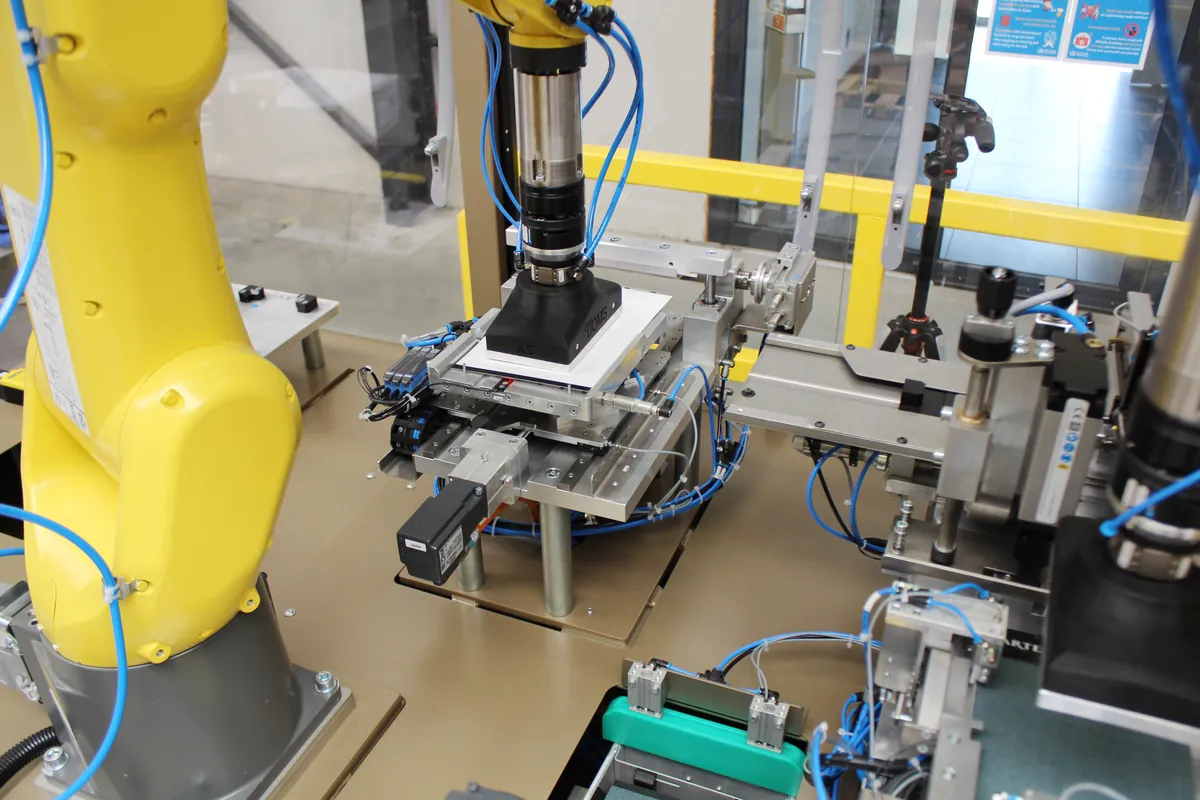
Robot handling syringe tubs within a compact production line
02

Robots that fit the line

Single robots, cobots, or complete robotic cells designed to integrate seamlessly into existing or new production environments.
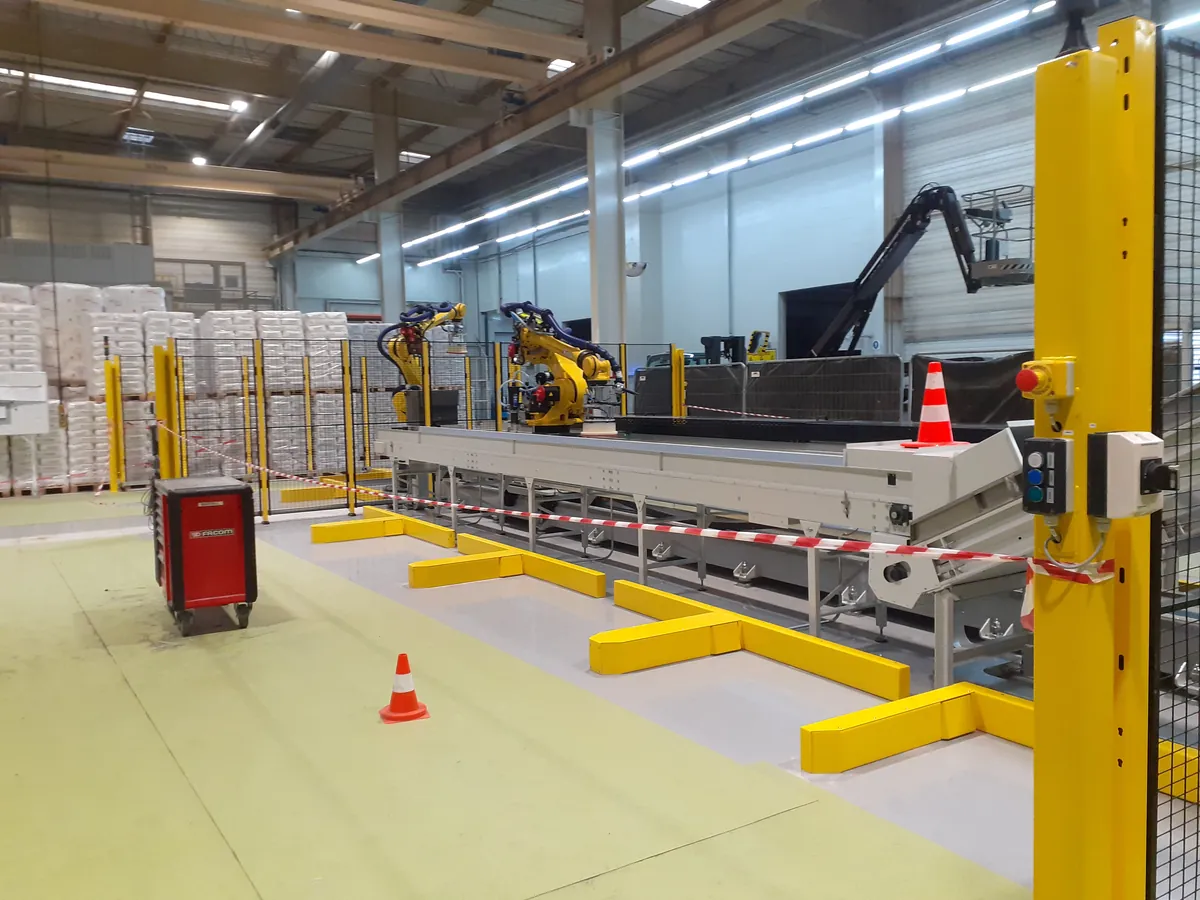
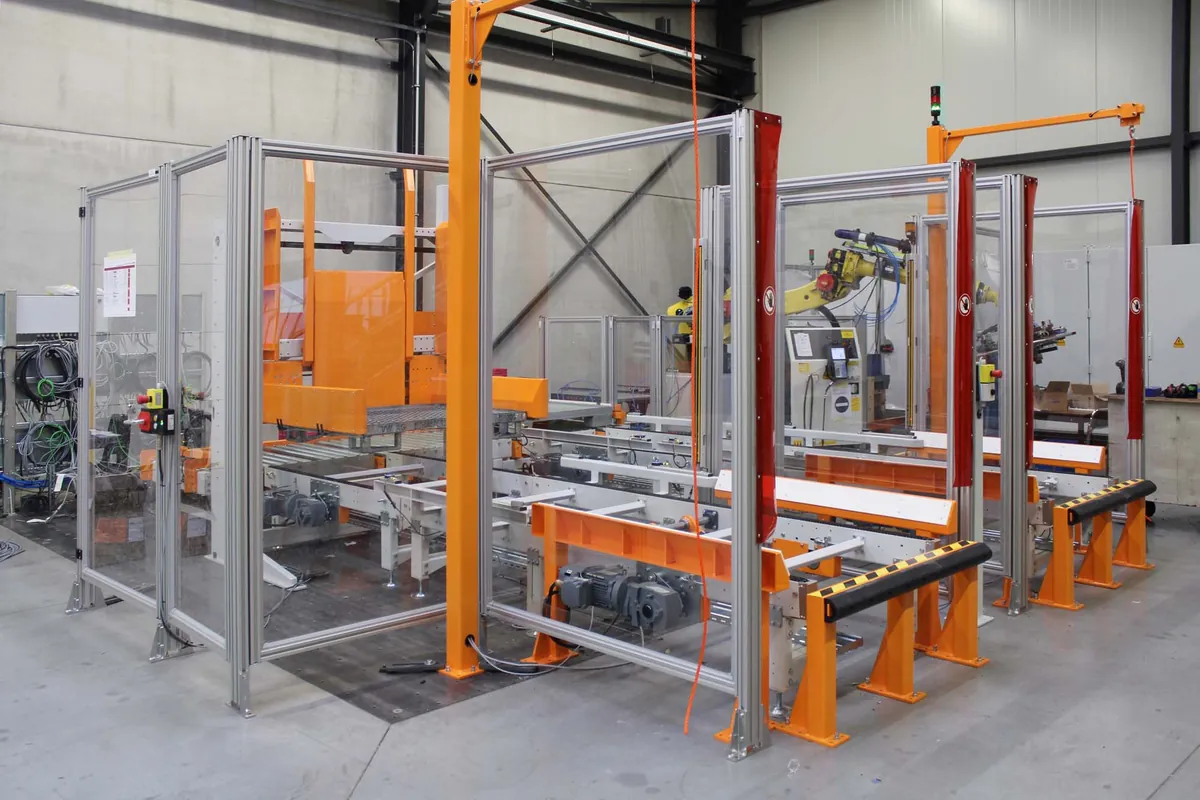
Robot cell with safety fencing on a production floor
03

Reliable operation on the floor

Solutions built for real factory conditions, ensuring stable performance, safety, and consistency across shifts.
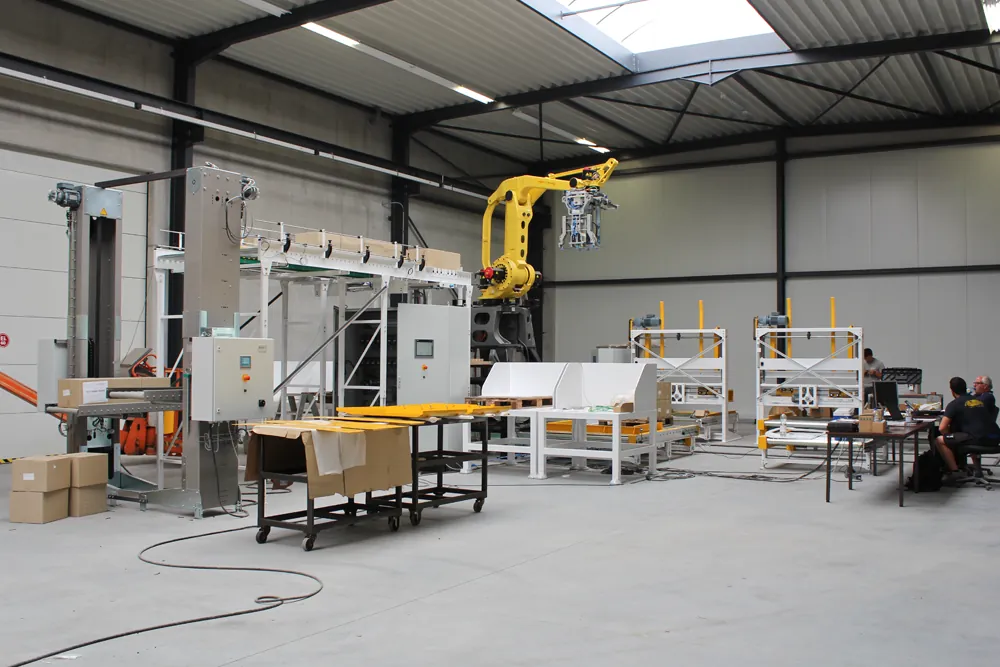
Production hall with a robot system and modular conveyor layout
04

Built to evolve over time

Robot handling systems designed to support future changes in layout, capacity, or process without disrupting the entire line.
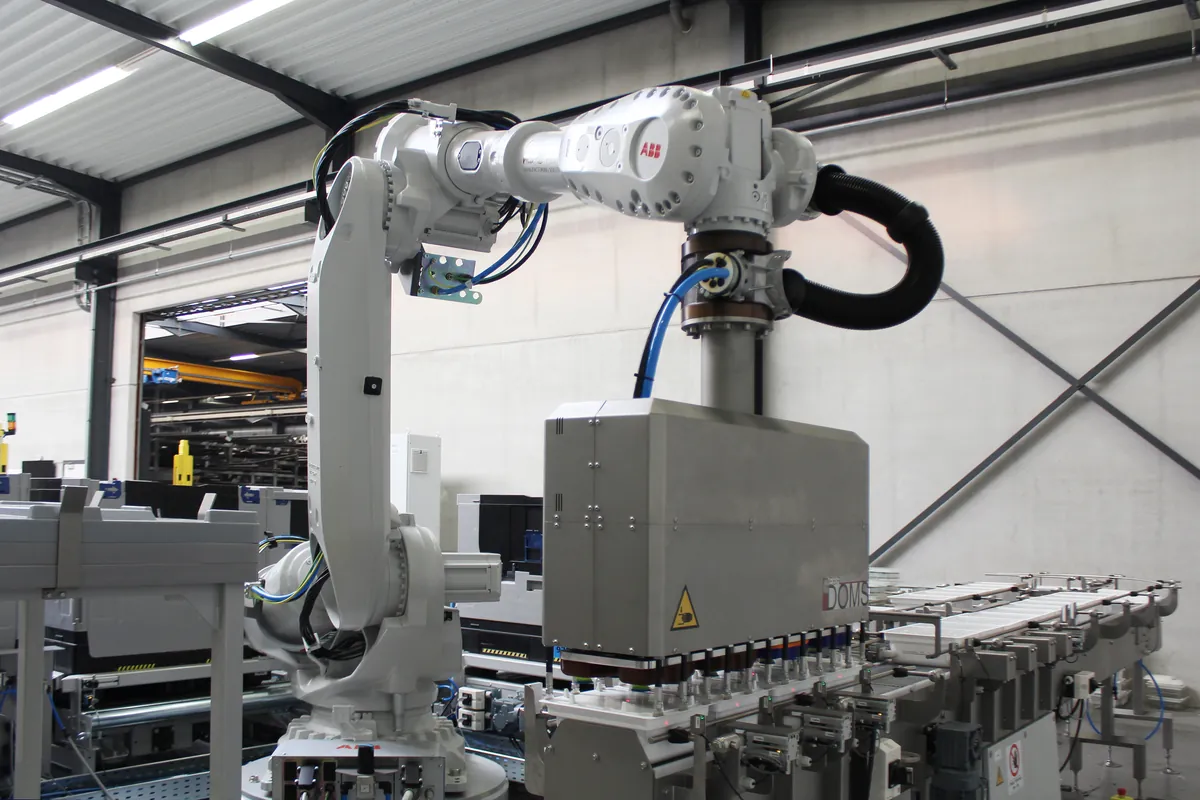
Robot handling solutions for real production tasks

Robot arm performing pick and place on a production line

Pick & place automation

High-speed robotic handling for repetitive transfer tasks within production lines.

  • Consistent positioning and timing
  • Increased throughput
  • Reduced manual handling
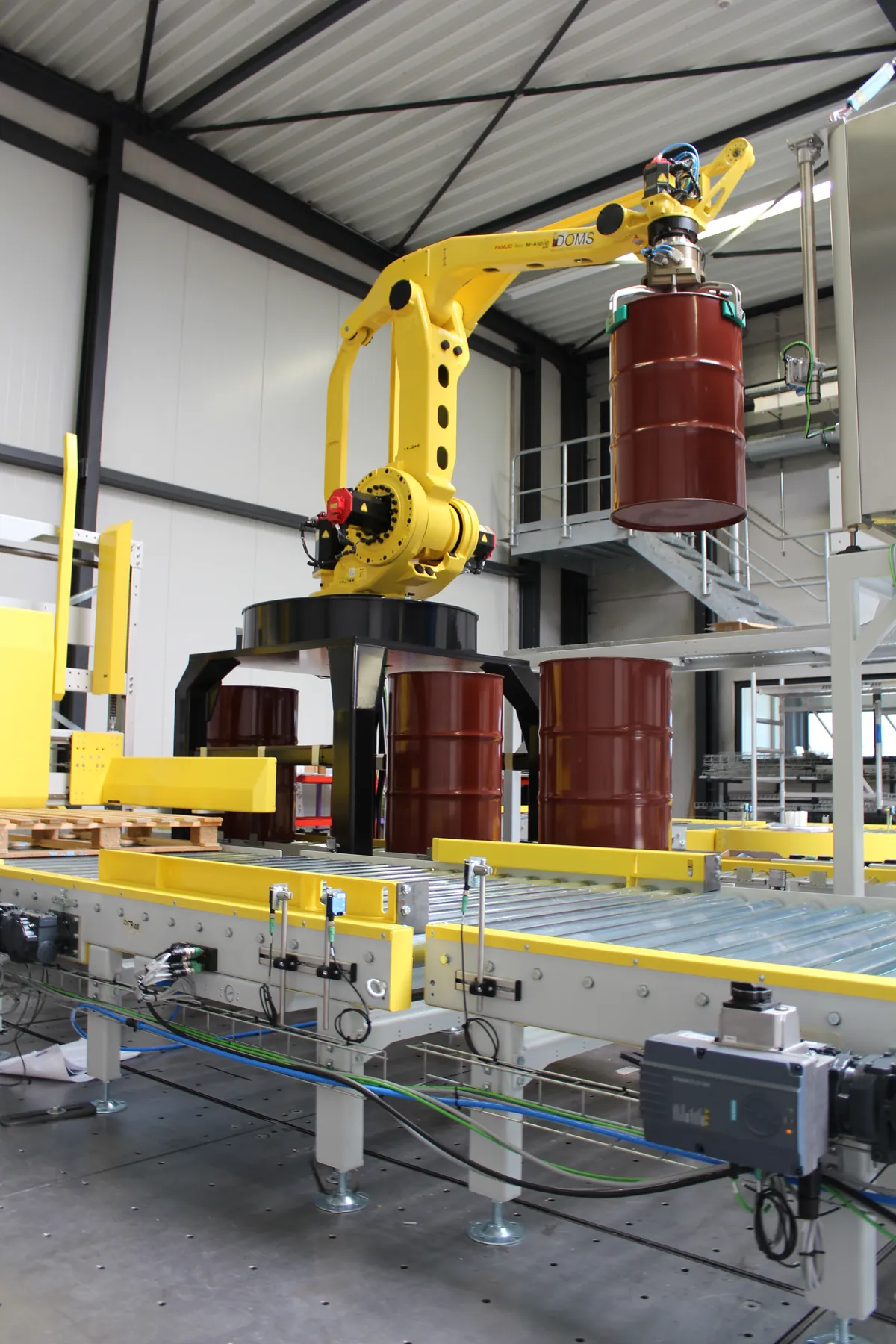
Palletising robot building a pallet at the end of a line

Palletising & depalletising

Robotic handling solutions for automated end-of-line pallet operations.

  • Stable and repeatable stacking
  • Reduced physical strain on operators
  • Integration with conveying systems
Robot loading a machine fixture for continuous machine tending

Machine tending

Robots integrated to load and unload machines, supporting continuous operation.

  • Improved machine uptime
  • Safer operator interaction
  • Reliable cycle repetition
Robots handling parts within an industrial processing line

Welding & handling tasks

Robotic handling integrated into welding and industrial processing environments.

  • Consistent handling accuracy
  • Improved process stability
  • Designed for industrial safety
Custom robotic cell with conveyors and safety fencing

Custom robotic cells

Fully engineered robotic handling cells tailored to complex workflows.

  • Robots, conveyors, and safety systems combined
  • Designed for specific production requirements
  • Scalable system architecture

    In production

    Smurfit Kappa Van Mierlo

    Robot palletising of boxes

    Frequently asked questions

    What is industrial robot handling?

    Industrial robot handling refers to the use of robots to automate repetitive, precision-critical, or physically demanding tasks within production lines. These systems handle products, components, or materials consistently, improving speed, accuracy, and safety while reducing manual labour and operational variability.

    When should a company consider robot handling automation?

    Robot handling becomes relevant when manual tasks limit throughput, quality consistency, or operator safety. It is especially valuable as production volumes grow, processes require repeatability, or labour-intensive tasks create bottlenecks that prevent efficient scaling.

    Can robot handling be integrated into existing production lines?

    Yes. Robot handling systems can be integrated into both existing and new production lines. Solutions are engineered to fit current layouts, machines, and workflows, minimising disruption while improving automation performance across the broader production system.

    What types of tasks are suitable for robot handling?

    Robot handling is commonly used for pick and place operations, palletising and depalletising, machine tending, welding-related handling, and complex workflows requiring consistent positioning, timing, and repeatability in industrial environments.

    How does robot handling improve safety and reliability?

    By automating physically demanding and repetitive tasks, robot handling reduces operator strain and exposure to risk. Systems are designed for stable operation, consistent cycles, and industrial safety standards, improving reliability and reducing unplanned downtime.

    Let’s talk about your robot handling requirements

    Tell us about your production environment, the task you want to automate, and the constraints you’re working with. We’ll help you evaluate whether robot handling is the right solution and how it can be integrated into your production system.