Chemical automation designed for safe, controlled production environments

We engineer and integrate automation systems that safely handle hazardous materials, support batch-based processes, and reduce human exposure across chemical production and packaging operations.
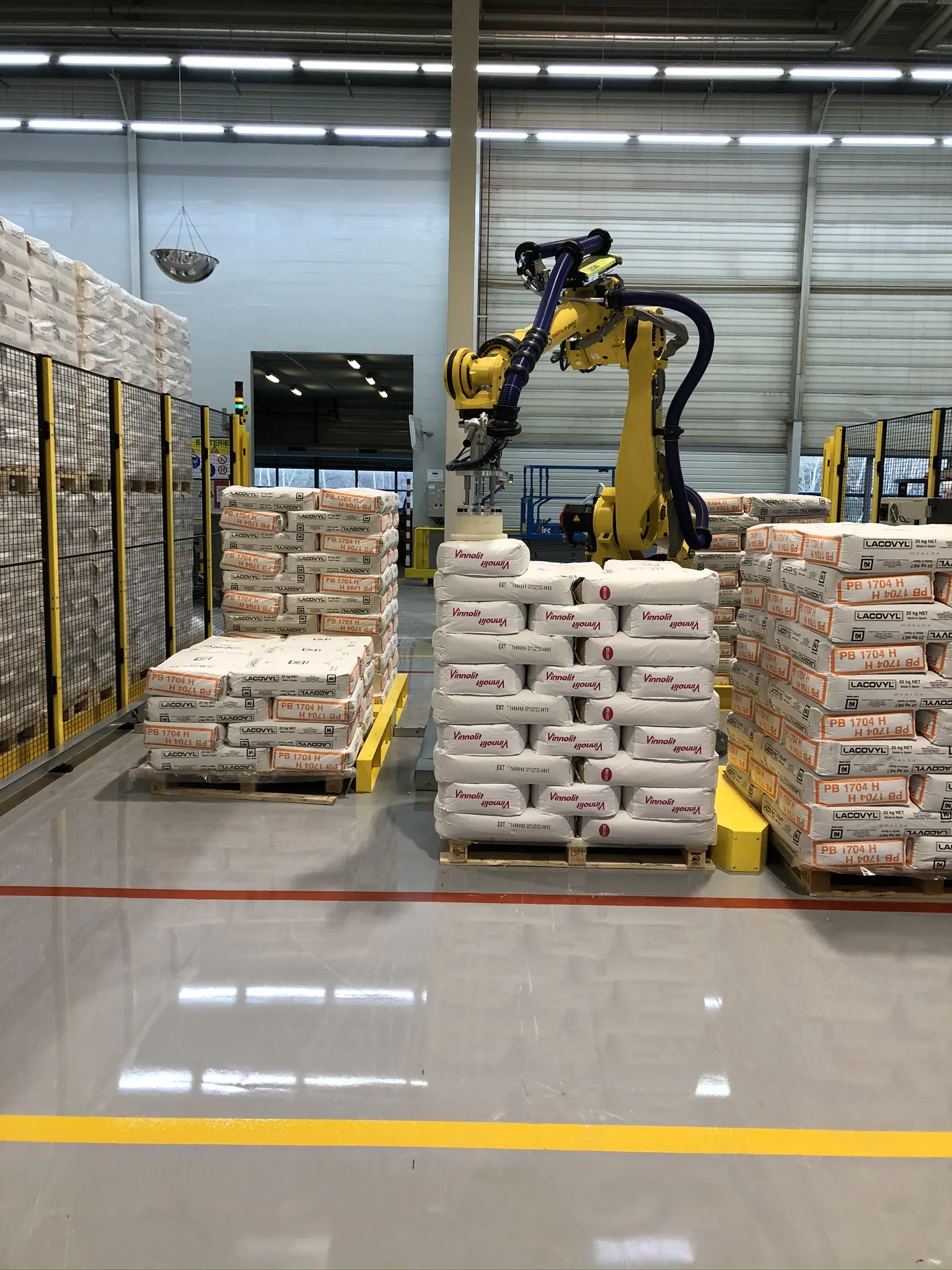
Robot depalletising bags of raw material in a chemical plant

Industry challenges

Where chemical production demands precision and safety

Chemical production environments require strict control over material handling, batch consistency, and operator safety. Managing hazardous substances, large volumes, and variable product formats becomes increasingly complex as production scales, making manual handling both risky and inefficient.

  • 01

    Hazardous material exposure

    Manual handling increases safety risks when working with chemicals, coatings, and bulk materials.

  • 02

    Batch variability

    Inconsistent handling between batches impacts process stability and output quality.

  • 03

    Heavy and unstable loads

    Large bags, boards, and bulk materials are difficult to handle safely and repeatedly.

  • 04

    Process interruptions

    Manual transfer between production stages slows throughput and increases downtime.

Our approach

Automation engineered for controlled chemical environments

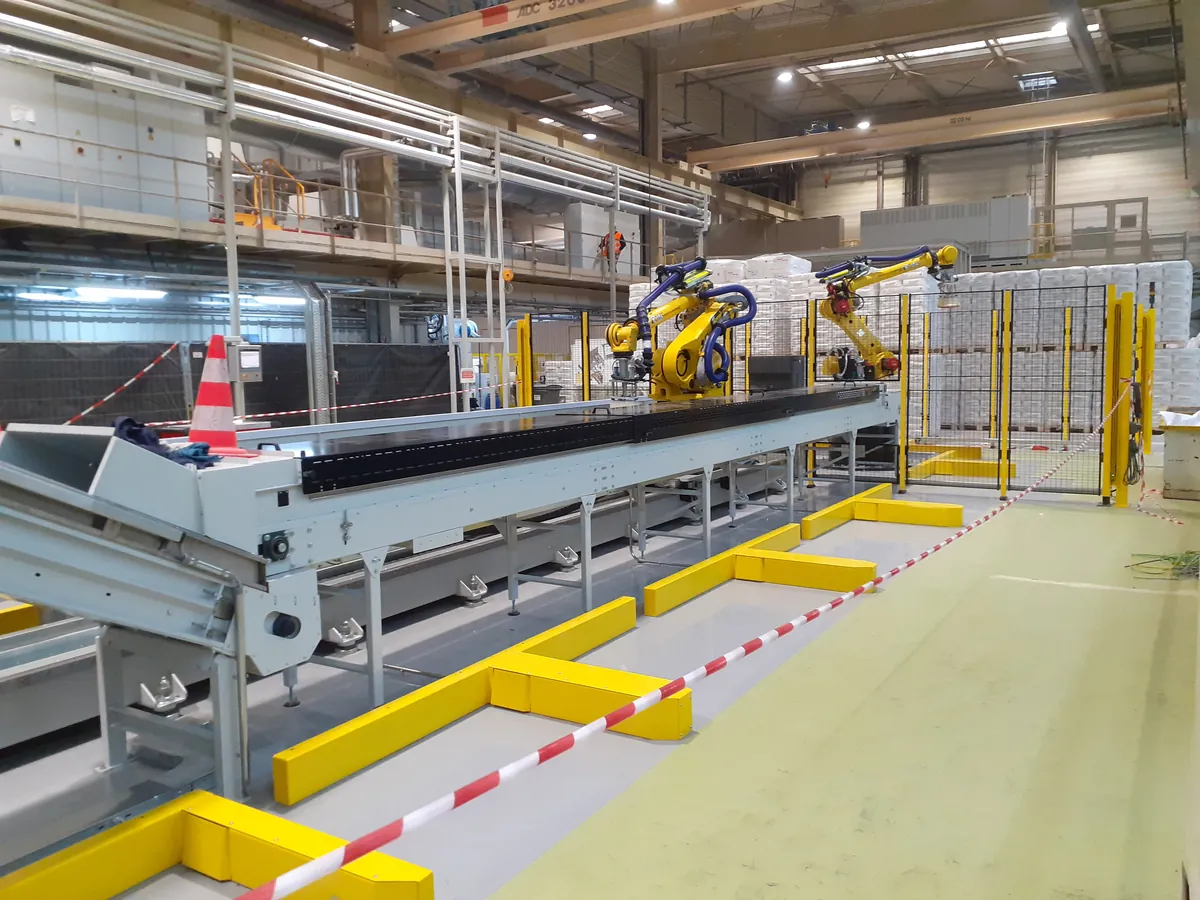
Robot cell with safety fencing in a chemical production hall

Safety-first system design

Automation systems are designed to minimise human exposure and support safe interaction with hazardous or sensitive materials.

Batch-oriented automation

Solutions are engineered to support batch-based workflows, ensuring consistent handling between processing stages.

Precision material handling

Systems are tailored to manage variable sizes, weights, and material properties without compromising stability.

Integrated production flow

Automation connects processing, transfer, and packaging stages into a coordinated production system.
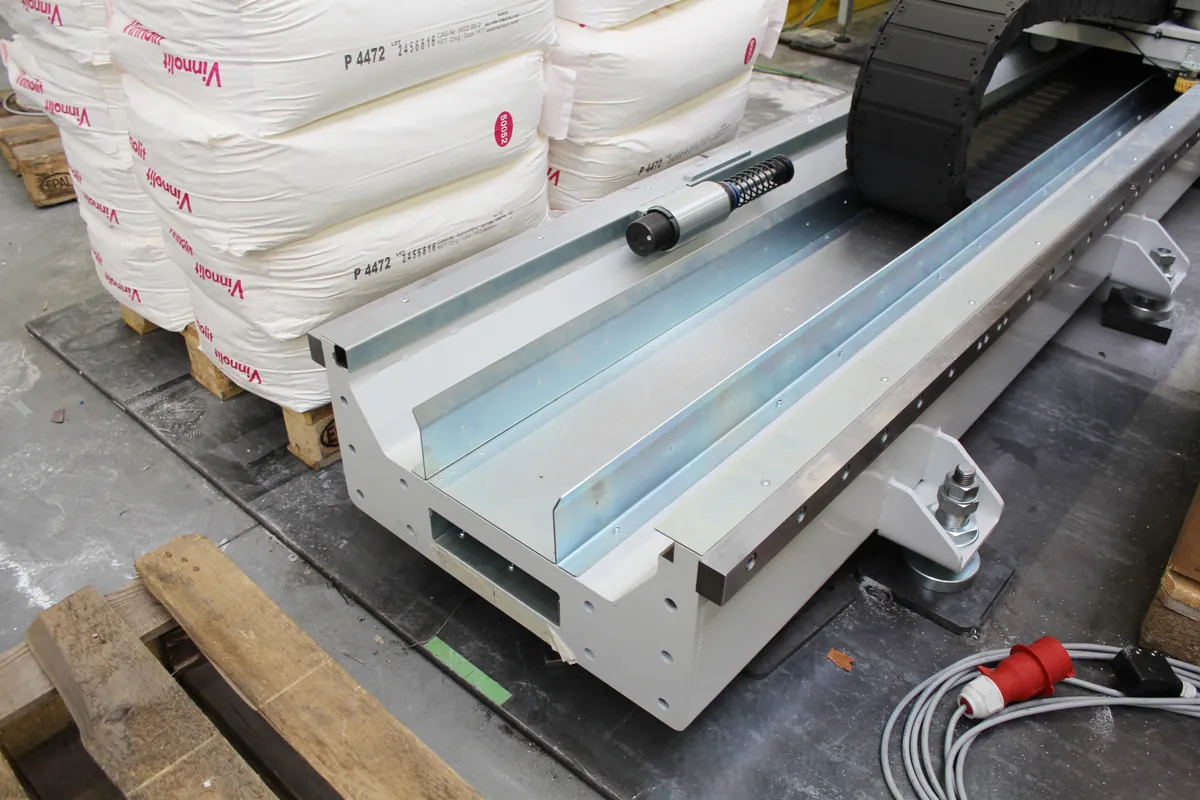
Automation solutions for chemical production and packaging

Gripper picking palletised bags for a debagging machine
01

Depalletising of bags and debagging

Automated handling of palletised bags feeding into debagging and downstream processing systems.

  • Reduced manual lifting
  • Stable feeding into debagging machines
  • Improved process continuity
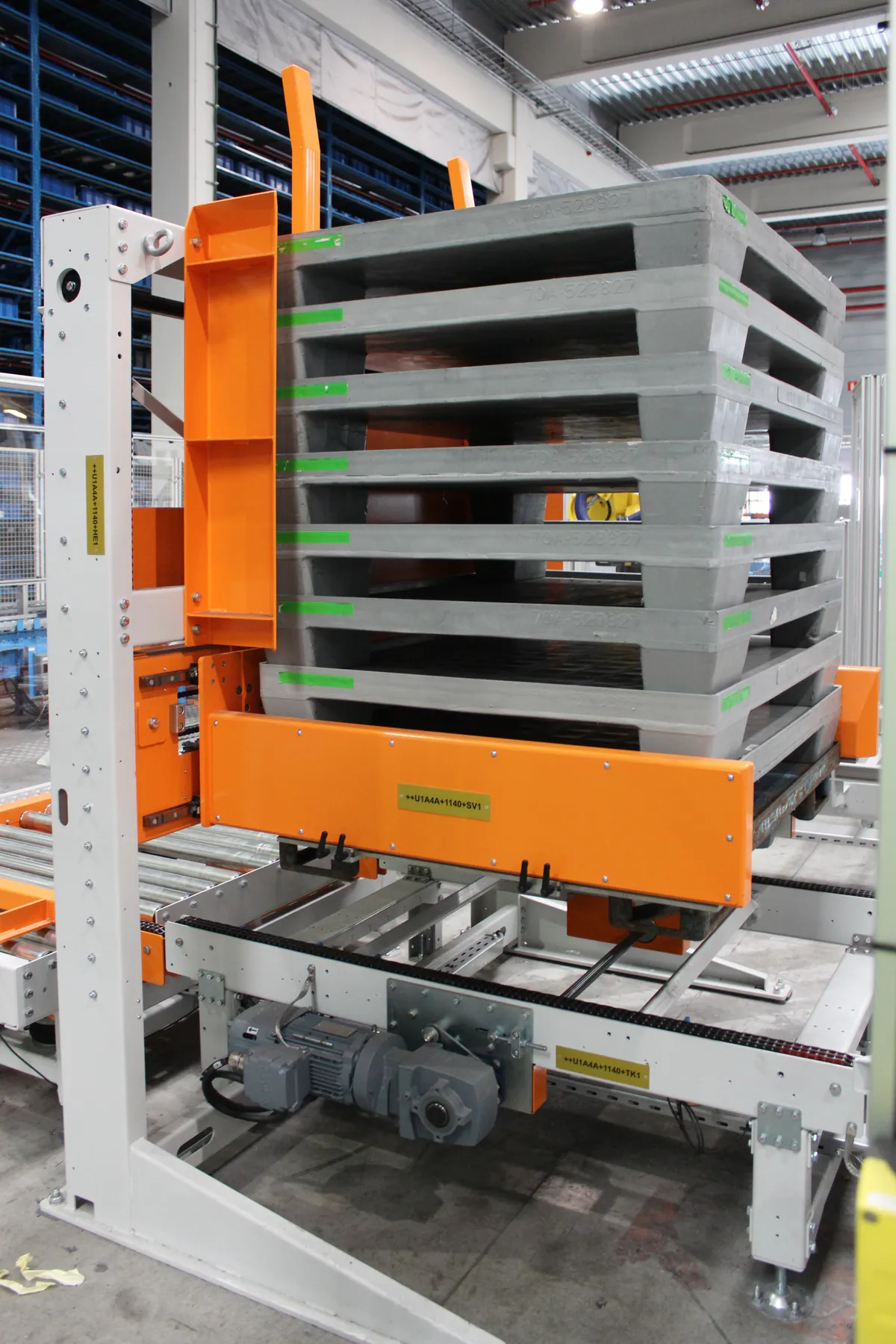
Stacker handling insulation boards between production steps
02

Stacking and destacking of insulation boards

Automated handling of coated XPS insulation boards across multiple production stages.

  • Consistent positioning between processes
  • Reduced handling damage
  • Improved production flow

Frequently asked questions

How does automation improve safety in chemical production environments?

Automation reduces direct human interaction with hazardous materials by mechanising handling, transfer, and packaging processes. This lowers exposure risks, improves process consistency, and supports safer working conditions while maintaining stable production flow in chemical manufacturing environments.

Can automation handle hazardous, heavy, or variable chemical materials?

Yes. Automation systems are engineered to handle hazardous substances, heavy loads, and variable material formats. Equipment, layouts, and control logic are adapted to material properties and safety requirements, ensuring controlled and reliable operation across chemical processes.

Does automation support batch-based chemical processes?

Automation can be integrated into batch-based chemical production by coordinating material feeding, processing stages, and downstream handling. This helps maintain continuity between batches, reduces manual intervention, and minimises delays caused by process transitions.

Is chemical automation scalable as production volumes increase?

Chemical automation systems are designed for scalability. Layouts, conveying paths, and control logic can be adapted to higher volumes, additional processing steps, or new product types without requiring a complete redesign of the production system.

Let’s talk about your chemical automation requirements

Tell us about your materials, production process, and safety constraints. We’ll evaluate how automation can reduce risk, improve handling consistency, and integrate seamlessly into your chemical production environment.