Autonomous mobile robots for flexible production and internal logistics

We design and integrate autonomous mobile robots (AMRs) into production and internal logistics systems to enable safe, flexible, and efficient material flow across dynamic factory environments.

Where internal logistics limit production flexibility

As production environments evolve, fixed transport systems and manual material handling struggle to keep up. Rigid routes, safety risks, and inefficient flows reduce responsiveness and make it harder to scale operations without increasing complexity or cost.

01

Manual transport slows operations

Relying on forklifts or manual handling introduces delays, variability, and safety risks across internal logistics.

02

Fixed routes reduce adaptability

Traditional systems depend on predefined paths that are costly and disruptive to change when layouts evolve.

03

Growing volumes strain logistics

As throughput increases, internal transport becomes harder to coordinate and control efficiently.

04

Disconnected systems limit flow

Isolated logistics solutions fail to support smooth, end-to-end production movement.

Mobile robots integrated into the production system

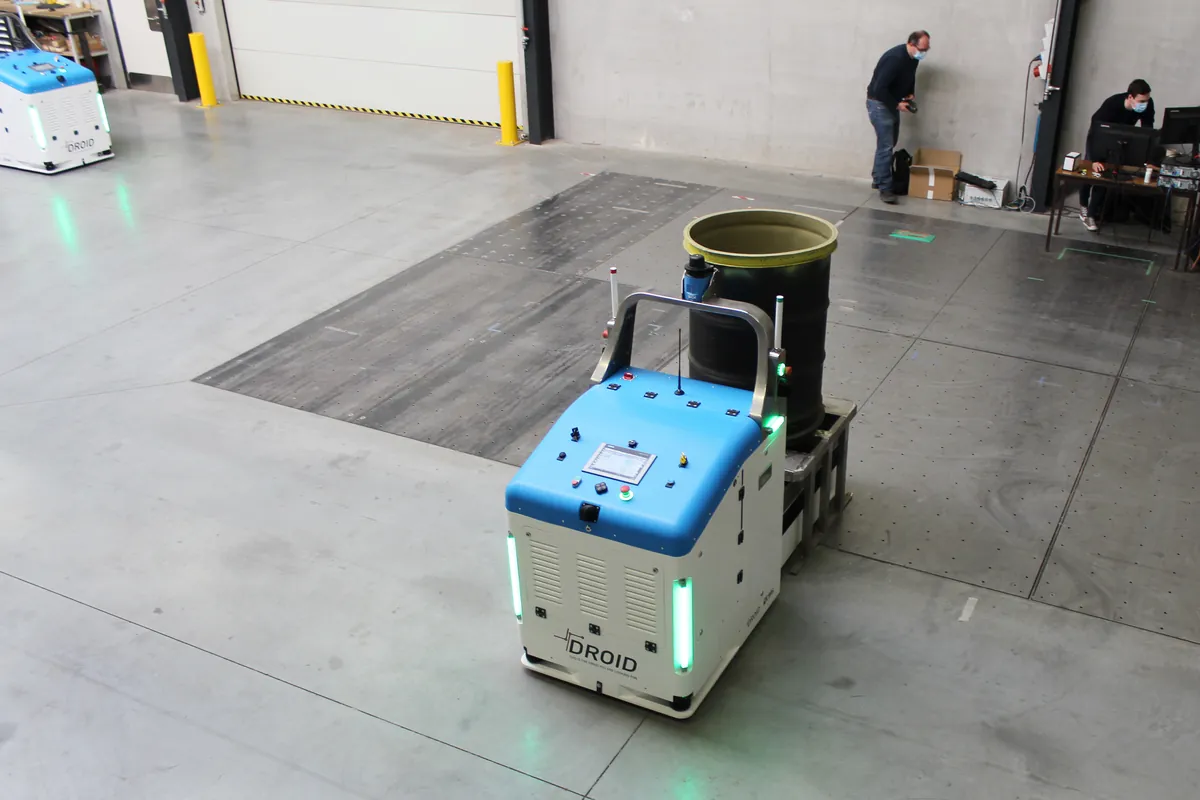
Autonomous vehicle carrying a drum through a production hall
01

System-level material flow

Mobile robots are integrated into the overall production and logistics system, coordinating movement between workstations, storage areas, and production lines.
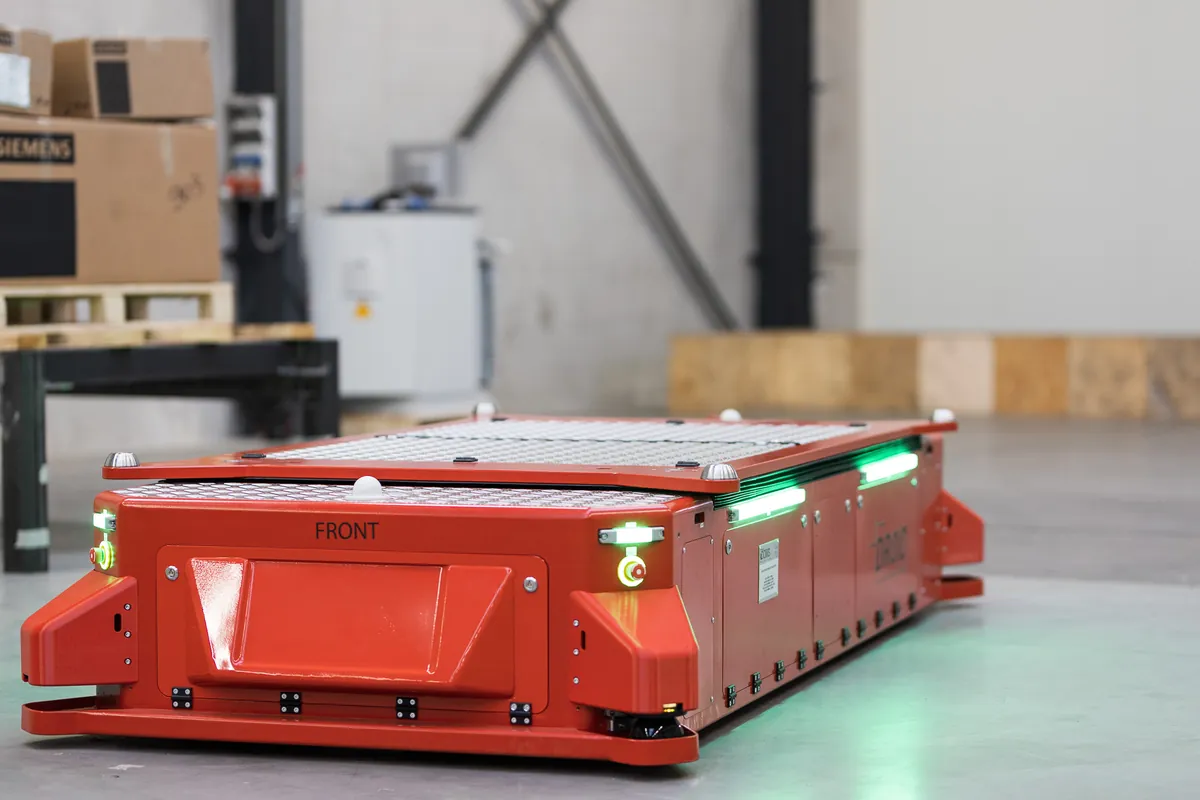
Red autonomous mobile robot driving without fixed tracks
02

Flexibility without fixed infrastructure

Autonomous mobile robots operate without fixed tracks or conveyors, allowing material flow to adapt as layouts, processes, or volumes change.
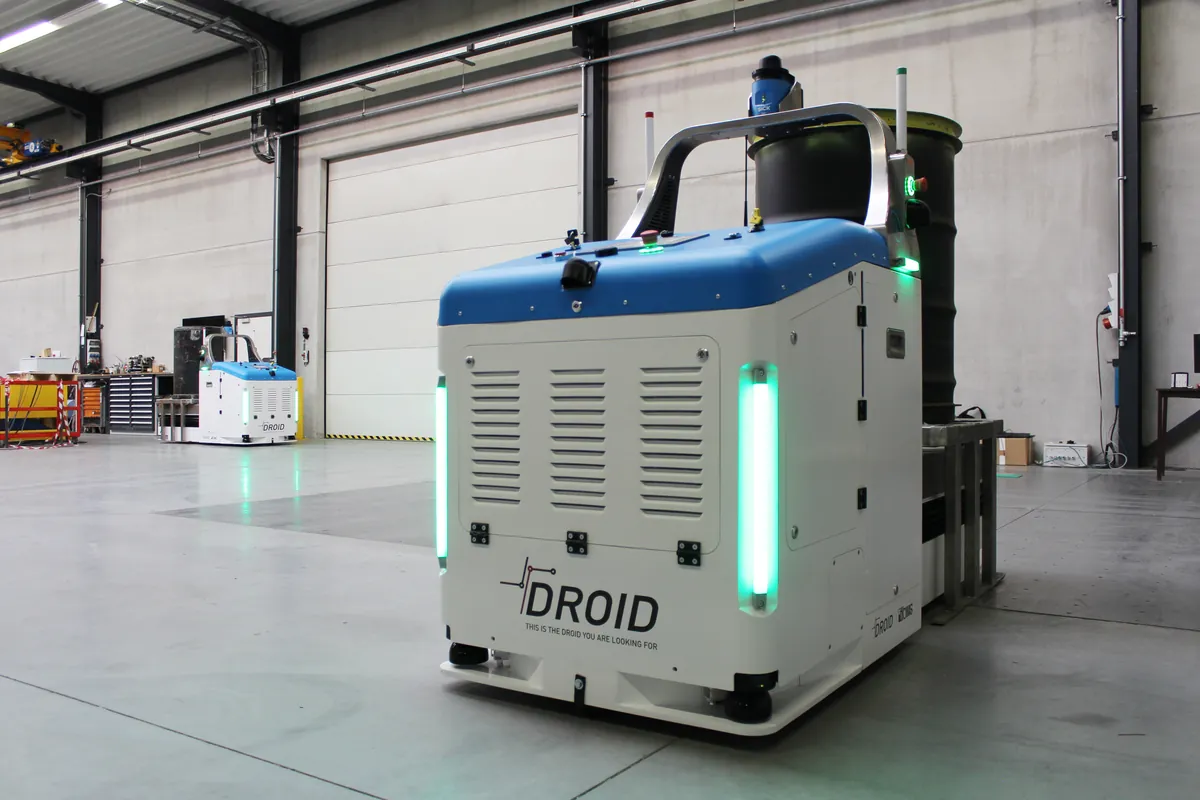
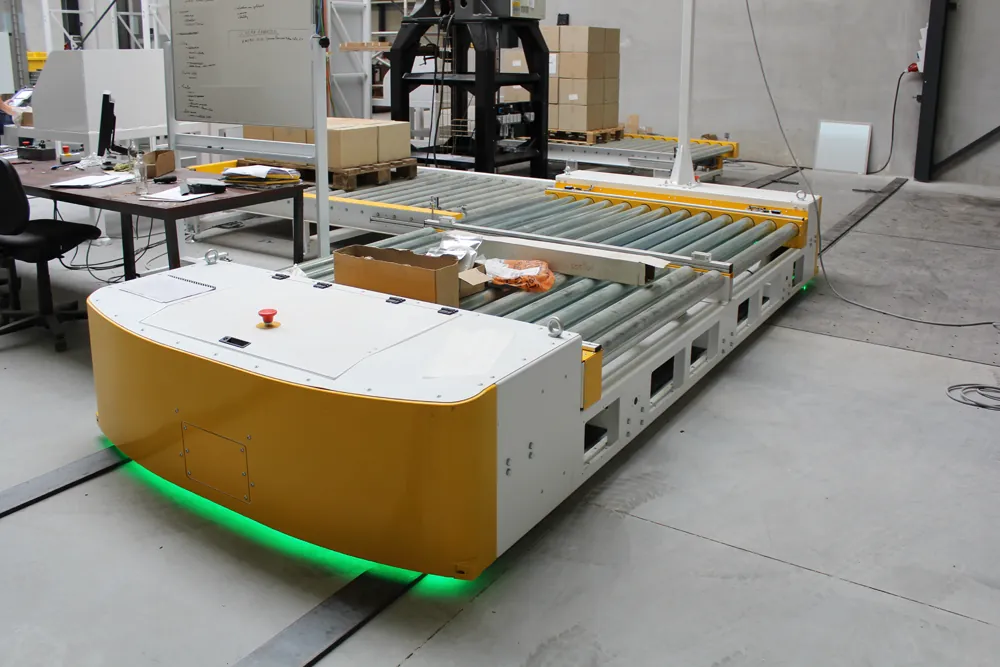
Autonomous transport vehicle operating on a production floor
03

Reliable operation in dynamic environments

Designed to navigate real production floors safely and consistently, mobile robots support continuous operations alongside people, machines, and vehicles.
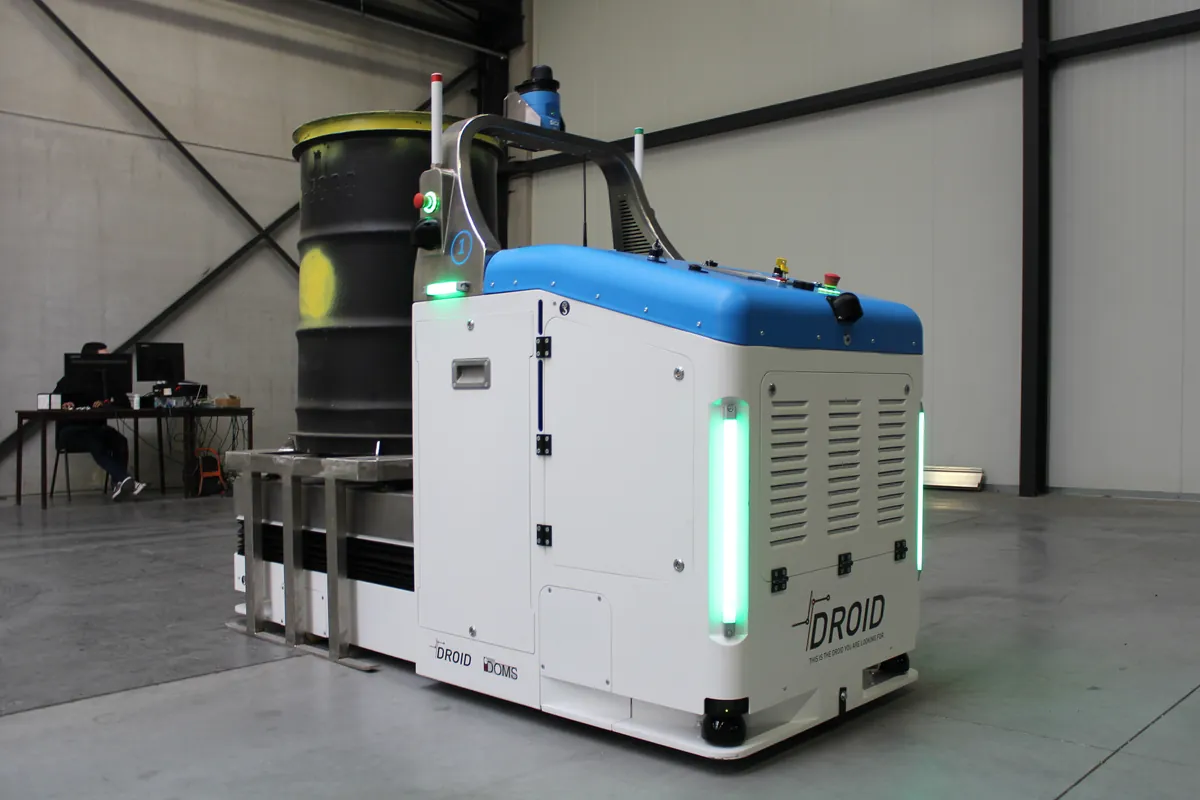
Autonomous vehicle with a drum next to a workstation area
04

Scalable internal logistics

Mobile robot systems grow with production needs, enabling additional units, routes, or tasks without disrupting existing operations.
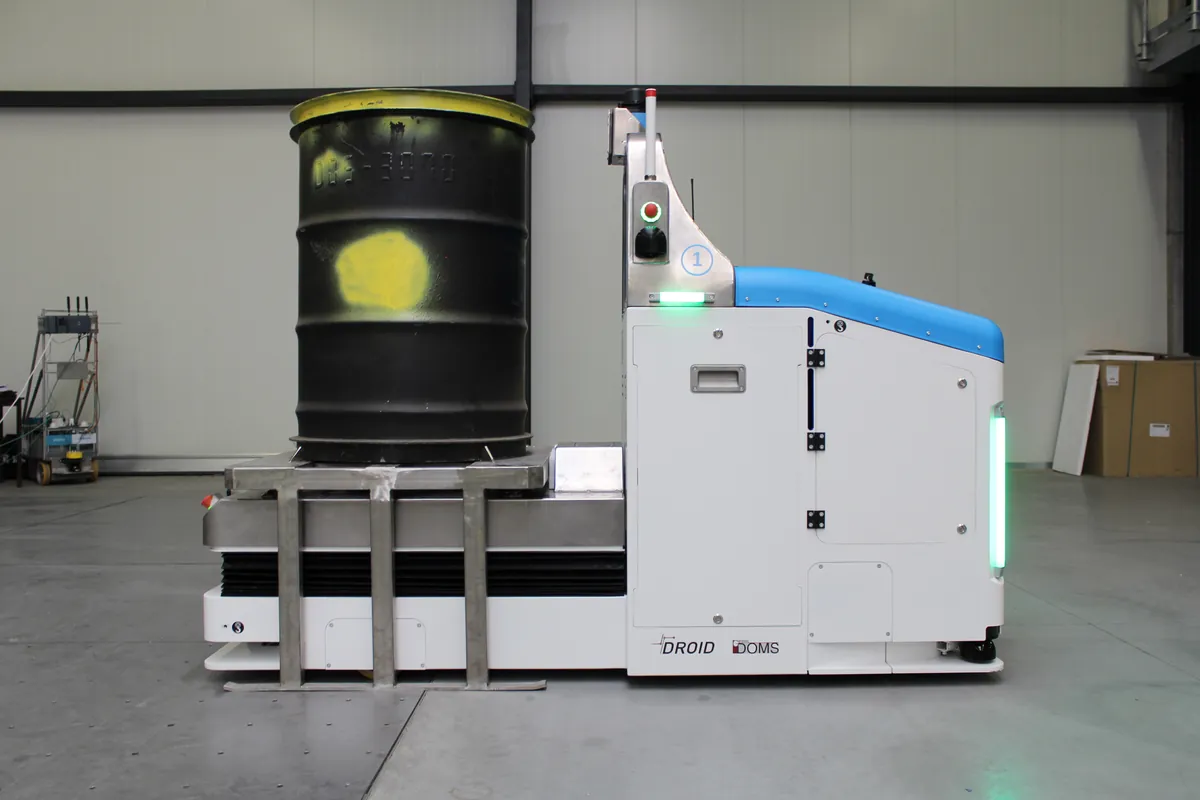
Mobile robot solutions for flexible material flow

Mobile robot transferring a drum between workstations

Material transport between workstations

Autonomous transport of components and products across production areas to keep operations moving smoothly.

  • Point-to-point transport between cells
  • Reduced reliance on manual handling
  • More predictable internal flow
Autonomous mobile robot moving between storage and production

Warehouse-to-production movement

Mobile robots connect storage, picking, and production zones without fixed routes or infrastructure changes.

  • Flexible routes and dynamic navigation
  • Faster replenishment to the line
  • Better control over internal logistics
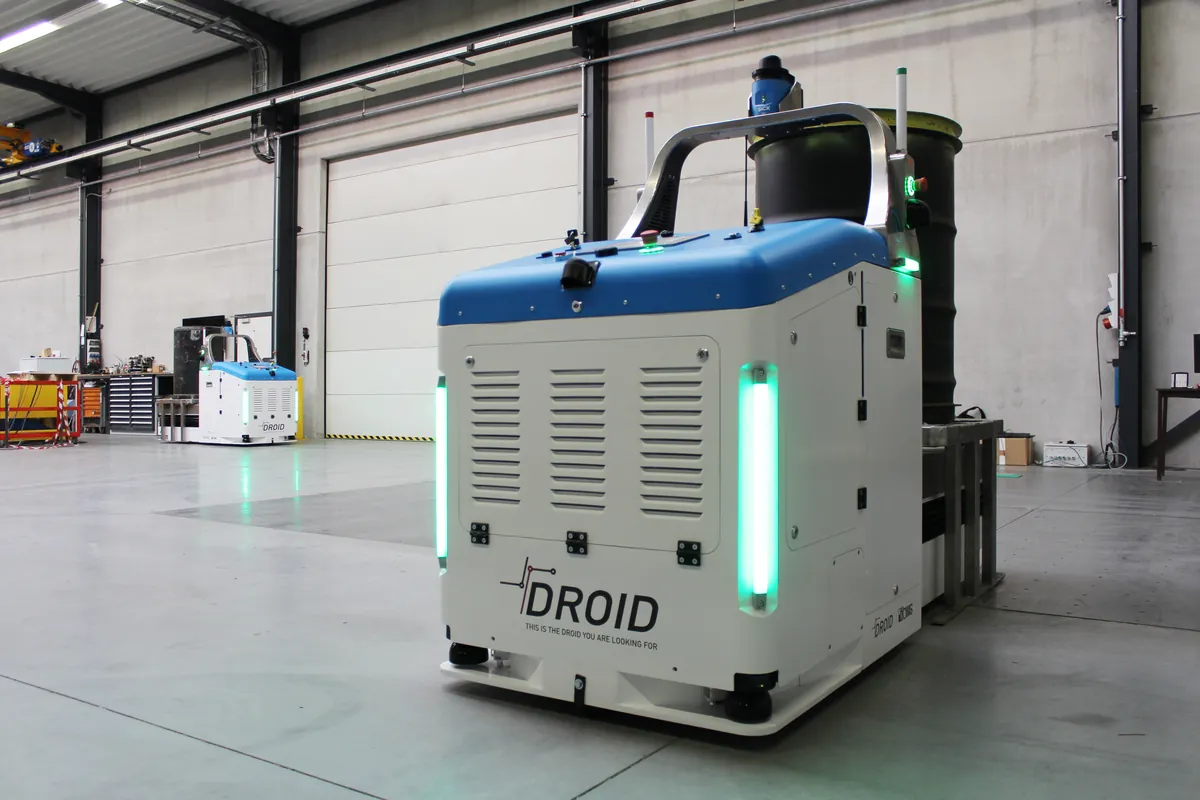
Autonomous vehicle delivering material to the line

Line-side delivery and replenishment

Consistent delivery of materials to workstations to avoid shortages and interruptions in production.

  • Supports continuous production cycles
  • Reduces line stops caused by delays
  • Enables just-in-time supply
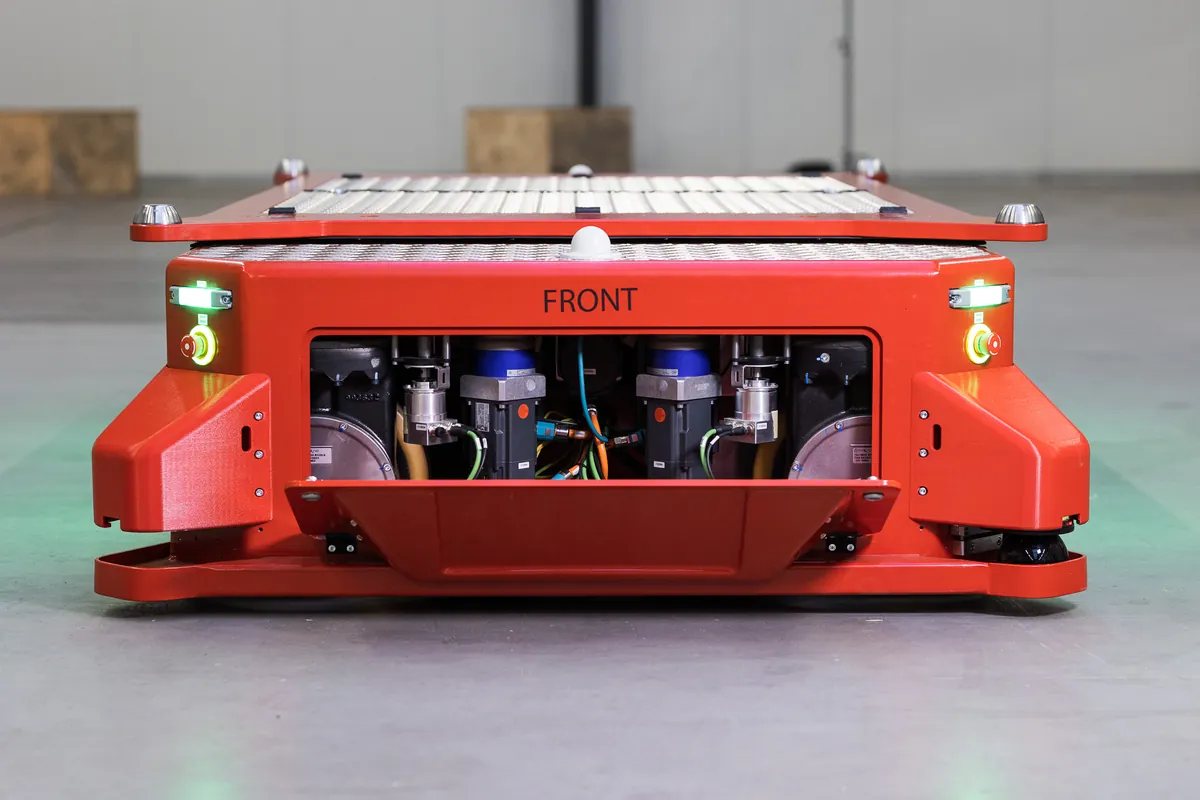
Front of an autonomous mobile robot with navigation sensors

Support for changing layouts

Designed for environments where processes evolve and floor layouts change over time.

  • No fixed tracks or guides required
  • Easy route updates as operations change
  • Adapts to new stations and workflows
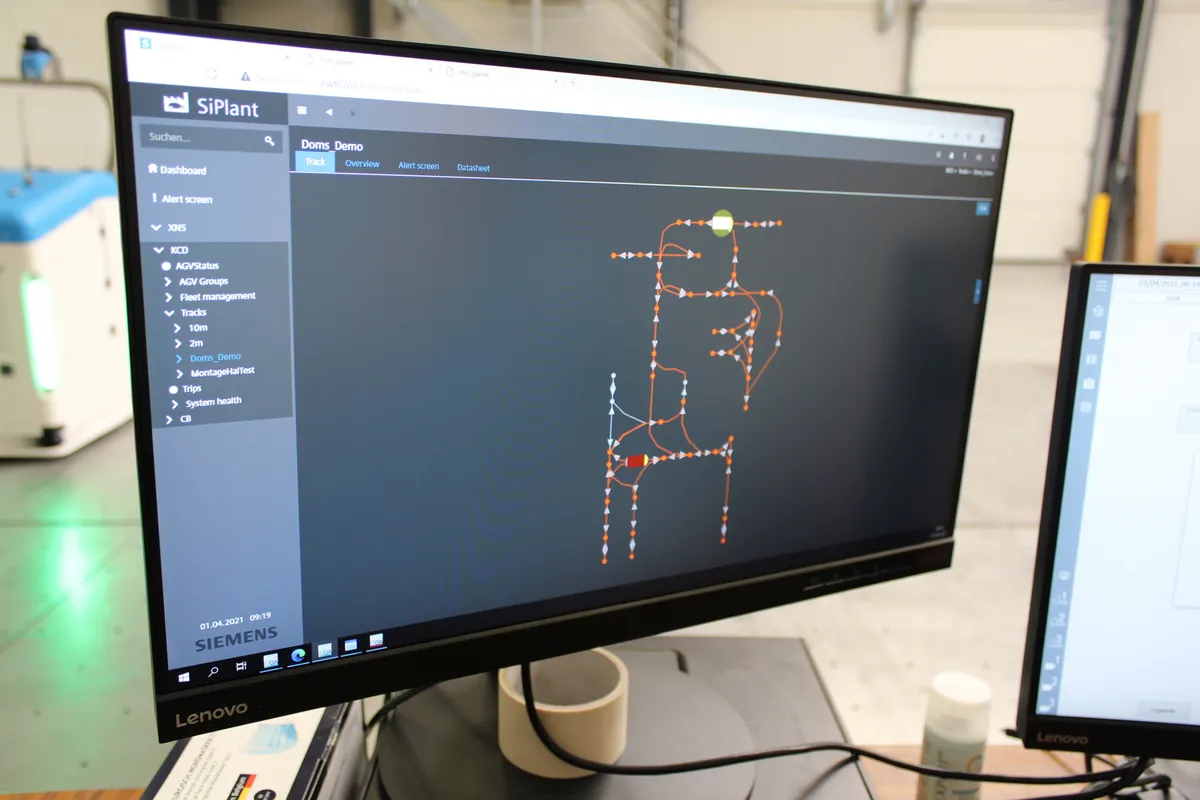
Fleet management software showing routes of autonomous vehicles

Scalable fleet operations

Mobile robot systems that grow with production volume and operational complexity.

  • Add units and tasks as demand grows
  • Expand routes without major redesign
  • Centralised coordination and visibility

    In production

    ENGIE Electrabel

    Autonomous transport of skids with radioactive waste drums

    Frequently asked questions

    What are autonomous mobile robots (AMRs) in industrial automation?

    Autonomous mobile robots are intelligent vehicles that transport materials independently within factories or warehouses. They use sensors, mapping, and real-time navigation to move safely and efficiently without fixed routes, adapting dynamically to their environment.

    How are AMRs different from AGVs?

    Unlike AGVs, which follow predefined paths or physical guides, AMRs navigate freely using sensors and digital maps. This allows greater flexibility, easier layout changes, and faster deployment in evolving production environments.

    Can mobile robots work alongside people safely?

    Yes. Mobile robots are designed with safety systems that detect obstacles and adjust movement in real time. This allows them to operate alongside workers and machines without disrupting daily operations.

    Are mobile robot systems scalable as production grows?

    Mobile robot systems are highly scalable. Additional units, routes, or tasks can be added as demand increases, without major infrastructure changes or system redesign.

    Let’s design flexible internal logistics for your operation

    Tell us about your production environment and logistics challenges. We’ll evaluate how autonomous mobile robots can be integrated into your system to improve flow, safety, and operational flexibility.